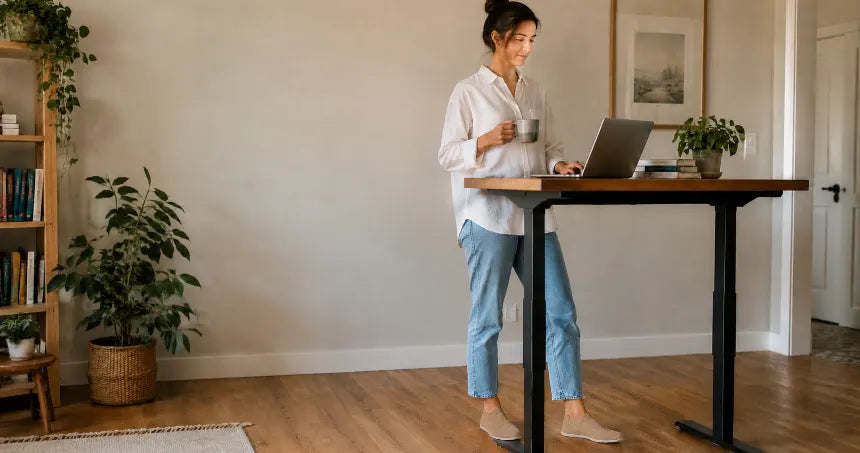
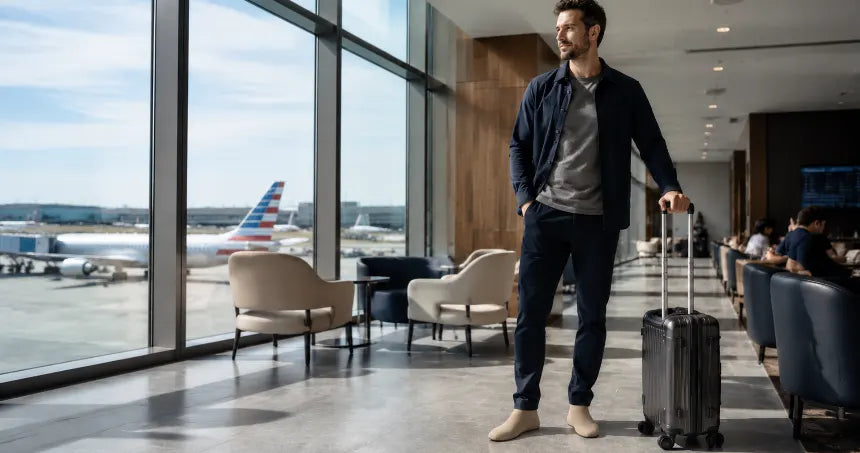
The best travel shoes are comfortable for hours, slip on and off fast at security, pack flat, and can handle a city sidewalk at the other end. Lace-up sneakers are great for long walking days; a knit slip-on like COOPS is easier for the airport, the plane and the hotel. A good plan is to wear one and pack the other.
Every travel day has the same moment. You’re in the security line, bag in one hand, boarding pass in your teeth, hopping on one foot to untie a shoe while the line behind you sighs. Then on the plane, you want them off. Then at the other end, you want them back on, fast, because the gate is a long walk away. Travel shoes have a harder job than most.
What makes a good travel shoe?
- Slip on, slip off. No laces makes security and the plane easier. You can step out of them under the seat and back in when the seatbelt sign goes off.
- Comfortable for hours. Travel days are long and full of standing, sitting and walking in random order.
- Light and packable. If you’re bringing a second pair, it should squash into a corner of your carry-on, not take half of it.
- Good enough for the destination. A real outsole and a look that works with jeans or travel clothes, so you can walk out of the hotel without changing.
- Washable. Airport floors, train platforms, hotel carpets. Being able to wash them when you get home is nice.


Should I wear sneakers or slip-ons to travel?
Depends on the trip. If day two is a 20,000-step city walk or a hike, you’ll want your proper walking shoes along. One approach: wear your sneakers on the plane, since they’re the bulkiest thing to pack, and bring COOPS for the hotel, the evenings and the flight home. Or do it the other way round: COOPS on for the airport, sneakers in the bag. Both work. The point is to have one easy pair for the in-between.
Whichever way you pick, wear in anything new before a trip. Blisters on day one ruin a vacation faster than rain.
Comfort on long flights
Long trips mean long stretches of sitting. The World Health Organization’s research on travel and blood clots found the risk of a clot roughly doubles after four or more hours of seated travel, though the absolute risk stays low, around one in 6,000 trips.1 The CDC’s travel advice is to walk around when you can and do calf exercises in your seat; compression stockings are mostly for people at higher risk.2 Shoes don’t change any of that, to be clear. But shoes that are easy to slip on can make it easier to get up and walk the aisle, and ankle circles are more comfortable without laces digging in.
Simple long-flight habits: take an aisle seat if you can, get up and walk every hour or two when the seatbelt sign is off, flex your ankles and calves while sitting, and drink water. If you have a history of clots or other risk factors, ask your doctor before a long trip.
Packing a second pair
COOPS weigh very little and don’t need to hold their shape, so they fold into the gap along the side of a carry-on. If they come home dirty, they go straight in the washing machine. The COOPS wash bag from the box doubles as a shoe bag in your suitcase, which keeps them away from your clean clothes.

Hotel, cabin and road trips
Hotel carpets, a rental cabin with cold floors, an RV, a cottage dock. These are the places a slip-on with a real outsole earns its spot: in from the car, down to the ice machine, out on the deck. Our camping, cottage and RV page shows more of this. Skiers take them for the lodge, too: see après-ski.
Should I take High Tops or Low Tops?
For flying, the Low Top is the fastest at security. For colder trips, the High Top covers your ankle and feels warmer on the plane. Same sole, same fit. The rubber sole keeps water out from below, but the knit upper isn’t waterproof, so pack something else for rainy hikes.
See how people travel in COOPS on our travel shoes page, or read sock shoes vs sneakers if you’re choosing between them.